The 6 Best Ski Jackets of 2026
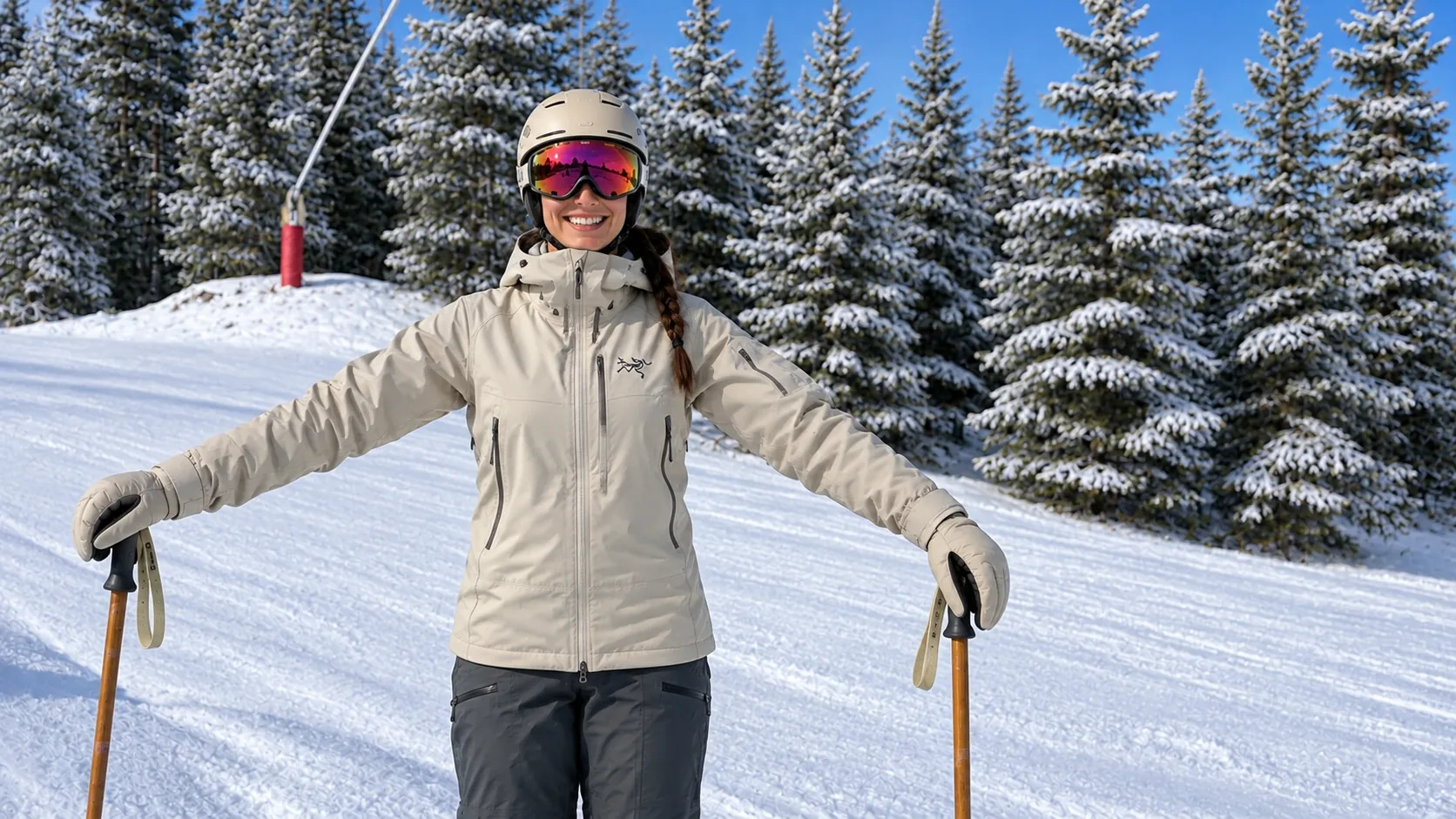
A soggy, drafty jacket can cut a ski day short faster than tired legs. The best ski jackets keep you dry through storm laps, block the wind on exposed chairlift rides, and dump heat when you’re charging hard.
To find the top options, we dug into the latest test results from OutdoorGearLab, Better Trail, and Treeline Review, then cross-checked them against what skiers recommend on Reddit and how owners rate them at major retailers. Every jacket below earned top marks from more than one source.
Our favorite overall is the Arc’teryx Sabre, a burly 3-layer Gore-Tex shell that lands at or near the top of nearly every expert list. If you’d rather skip the layering game and just stay warm, the Helly Hansen Alpha LifaLoft is the insulated jacket to beat. Bargain hunters should look at the REI Co-op Powderbound Insulated, which punches well above its weight class.
Quick Picks
- Best Overall: Arc’teryx Sabre
- Best Insulated: Helly Hansen Alpha LifaLoft
- Best Resort Shell: Patagonia Storm Shift
- Best for Storm Days: Trew Gear Cosmic Primo
- Best 3-in-1: Patagonia 3-in-1 Powder Town
- Best Budget: REI Co-op Powderbound Insulated
All six come in men’s and women’s versions; the women’s Sabre is the Sentinel, and the women’s Cosmic Primo is the Stella Primo.
Ski Jacket Comparison Chart
| Jacket | Type | Waterproofing | Insulation | Weight | Best for |
|---|---|---|---|---|---|
| Arc’teryx Sabre | Shell | 3-layer Gore-Tex ePE | None (flannel backer) | 1 lb 8.9 oz | All-conditions resort and sidecountry |
| Helly Hansen Alpha LifaLoft | Insulated | 2-layer Helly Tech Professional | LifaLoft synthetic | 2 lb 10 oz (XL) | Cold resorts, skiers who run cold |
| Patagonia Storm Shift | Shell | 2-layer Gore-Tex ePE | None (fleece lining) | 1 lb 12.8 oz | Resort skiing in mixed weather |
| Trew Gear Cosmic Primo | Shell | 3-layer PNW Primo (20K/20K) | None | 1 lb 14.1 oz (M) | Storm days, wet climates, freeride style |
| Patagonia 3-in-1 Powder Town | 3-in-1 | 2-layer H2No Performance Standard | 60 g FullRange liner | 2 lb 14.4 oz | Variable weather, ski vacations |
| REI Co-op Powderbound Insulated | Insulated | 2-layer Peak | 80 g body / 60 g sleeves | 1 lb 14.3 oz | Budget-minded resort skiers |
Weights come from manufacturer, retailer, or tester figures and vary by size.
Best Ski Jackets
Arc’teryx Sabre
Type: Uninsulated shell · Waterproofing: 3-layer Gore-Tex ePE, 80-denier recycled nylon · Weight: 1 lb 8.9 oz · Best for: All-conditions resort skiing with the occasional sidecountry lap
The Arc’teryx Sabre earns our top spot for its bombproof weather protection, excellent venting, and clean freeride style. If you’ve been following gear reviews, you’ll notice the Sabre keeps landing on top: Treeline Review has named it the best men’s ski jacket several years running, OutdoorGearLab gives it an Editors’ Choice award as the best resort shell, and Better Trail ranks it among the best all-around jackets money can buy. On Reddit, Arc’teryx is consistently the brand skiers rate highest.
The secret is a build that’s burly yet comfortable. The 80-denier face fabric shrugs off tree branches and ski edges, while the PFAS-free Gore-Tex ePE membrane seals out wind and wet, driving snow. A soft flannel backer takes the crinkly edge off the hardshell feel and adds a small dose of warmth. Testers describe it as the jacket they trust when the forecast turns ugly. Add a helmet-compatible StormHood, long pit zips for dumping heat, a powder skirt, a sleeve pass pocket, two internal drop pockets, and a RECCO reflector, and you get everything a resort skier needs and nothing they don’t.
That said, the Sabre isn’t perfect. As a shell, it offers little warmth on its own, so you’ll need to invest in quality midlayers. OutdoorGearLab notes that the powder skirt isn’t removable, and dedicated ski tourers will find it heavier and stuffier on the skin track than a purpose-built backcountry shell. Still, the regular, freeride-leaning cut fits a light puffy underneath without looking baggy over a thin fleece.
Our verdict: This is a buy-once, cry-once jacket for skiers who log lots of days in every kind of weather. If you only ski a handful of days each season, the Patagonia Storm Shift delivers Gore-Tex protection without the premium price tag.
Helly Hansen Alpha LifaLoft
Type: Insulated · Waterproofing: 2-layer Helly Tech Professional, 4-way stretch shell · Insulation: LifaLoft synthetic (made with PrimaLoft) · Weight: 2 lb 10 oz (XL) · Best for: Cold-climate resort skiers and anyone who runs cold
For skiers who want to zip up one jacket and forget about layering, the Alpha LifaLoft is the benchmark. OutdoorGearLab has crowned it the best overall ski jacket several years in a row, and it posted the highest score in their latest test of 17 men’s jackets. Better Trail calls it the ultimate insulated resort jacket, and on Reddit, Helly Hansen is the go-to recommendation for skiers who want quality without a flashy pro look.
The star of the show is LifaLoft insulation, which traps more air than standard synthetic fill and delivers impressive warmth for its weight. OutdoorGearLab’s testers stayed toasty with temps in the teens and a below-zero windchill, while Better Trail’s tester stayed cozy in the high teens wearing only a base layer. Better yet, the stretchy shell moves with you through every turn. Helly Hansen also nails the little things: an insulated chest pocket that protects your phone battery from the cold, a leashed goggle wipe, soft wrist gaiters, a back vent plus underarm zips for heat management, a removable helmet-compatible hood, a detachable powder skirt, and a RECCO reflector.
That said, the Alpha LifaLoft doesn’t seal out the elements quite as well as Gore-Tex shells like the Sabre, though it’s still fully storm-worthy. It also runs trim and short, so skiers who prefer a long, roomy freeride cut should try one on first. And all that insulation becomes a liability on warmer days; Better Trail’s tester was reaching for the pit zips on sunny afternoons near 30°F.
Our verdict: For cold-prone skiers and frigid home mountains, the Alpha LifaLoft is an easy pick. If you’re on the fence, the lighter Helly Hansen Alpha 4.0, Better Trail’s favorite insulated jacket, offers the same design with a bit less warmth.
Patagonia Storm Shift
Type: Shell with fleece lining · Waterproofing: 2-layer Gore-Tex ePE, 150-denier recycled polyester · Weight: 1 lb 12.8 oz · Best for: Resort skiers who want Gore-Tex protection and all-day comfort
Sitting at the top of Patagonia’s resort lineup, the Storm Shift is a tough, highly protective shell built for skiers who head out no matter what the sky is doing. It’s the highest-rated jacket in Better Trail’s 2026–2027 guide, and OutdoorGearLab gave its sibling, the Insulated Storm Shift, a Best Timeless Investment award.
What sets it apart is the lining. Instead of the clammy hanging mesh found in most 2-layer shells, Patagonia uses a body-mapped zigzag fleece that adds a touch of warmth, wicks sweat away, and feels soft over a base layer. Better Trail wore it from midwinter storm cycles to balmy spring afternoons and found it impressively mobile yet rock-solid in high winds and heavy snow. Pit zips and the moisture-wicking interior kept things comfortable when the sun came out. The feature set is clean and resort-focused: a helmet-compatible hood, a tall collar, coated zippers, a sleeve pass pocket, a low-profile powder skirt that tucks away neatly, and a concealed RECCO reflector. Better yet, it’s made from 100% recycled materials without PFAS in a Fair Trade Certified factory.
It’s not without quirks. Better Trail found the left hand-pocket zipper prone to snagging, and the chest pockets are stacked on one side, which can feel lopsided. It also isn’t cheap for a 2-layer jacket. Backcountry skiers should look elsewhere, since the thick face fabric makes it too warm and bulky for the skin track.
Our verdict: For resort skiers who ride in every kind of weather, the Storm Shift is a durable, comfortable shell that will last for years. If you run cold, the Insulated Storm Shift adds targeted synthetic warmth.
Trew Gear Cosmic Primo
Type: Uninsulated shell · Waterproofing: 3-layer PNW Primo, 100% recycled nylon, 20,000 mm / 20,000 g · Weight: 1 lb 14.1 oz (M) · Best for: Hard-charging resort skiers in wet climates who want freeride style
The Cosmic Primo is the shell for resort rippers who don’t shy away from storm days. Oregon-based Trew Gear designs for the soggy Pacific Northwest, and it shows. OutdoorGearLab gave the Cosmic a Top Pick award for blending function with fashion, Better Trail praises its durability and style, and The Inertia named it its best all-around shell. Owners agree, too: it holds a 4.9-out-of-5 average across more than 250 reviews on Trew’s site, and Reddit skiers call it well made and great looking.
The Cosmic is built around Trew’s in-house PNW Primo fabric, a thick, slightly stretchy 3-layer laminate that feels closer to armor than to a typical crinkly hardshell. One OutdoorGearLab tester skied through frozen aspens and brush without worrying about tearing it. Pair that with a generous helmet-compatible hood, a tall collar, and a long hem that covers your backside on the lift, and you can batten down the hatches in just about any storm. Storage is a highlight, with zippered chest and hand pockets, a forearm pass pocket, an internal zip pocket, and mesh drop pockets. Sixteen-inch pit vents, a removable powder skirt, and a RECCO reflector round out the package.
That burly build comes at a cost. The Cosmic is heavy and stiff for a shell, and Better Trail says it’s too bulky for touring; even Trew points backcountry-focused skiers toward a lighter option. OutdoorGearLab also found the tall collar sometimes covered their mouth on runs. Finally, the modern freeride fit runs large, so Trew suggests sizing down if you’re between sizes.
Our verdict: If you ski bell to bell, love a stormy powder day, and want a shell with personality, the Cosmic Primo is a winner. It’s also available in extended sizes up to 5XL.
Patagonia 3-in-1 Powder Town
Type: 3-in-1 (shell + zip-out insulated liner) · Waterproofing: 2-layer H2No Performance Standard, 150-denier recycled polyester · Insulation: 60 g FullRange in the liner · Weight: 2 lb 14.4 oz · Best for: Skiers who want one purchase that covers cold days, spring days, and après
Most 3-in-1 jackets are entry-level pieces built to hit a low price, but Patagonia bucks the trend with the Powder Town. Treeline Review named it the best-value ski jacket in its 2026 men’s guide, and Better Trail calls it the highest-performing 3-in-1 it has tested. The appeal is simple: wear the waterproof shell alone for spring corn, the liner alone around town, or zip them together for frigid chairlift rides.
The 2-layer H2No shell isn’t quite as beefy as Gore-Tex, but it holds its own in all but the nastiest weather. Treeline’s tester skied a full day of sleet and rain and stayed completely dry, and Better Trail popped open the pit zips to stay comfortable on warm, wet spring laps. The zip-out liner is the real standout. It uses 60 g of FullRange insulation, the same stretchy, breathable synthetic found in Patagonia’s popular Nano-Air line, so it regulates temperature well when you’re working hard. You also get a helmet-compatible hood, a powder skirt, a sleeve pass pocket, interior drop pockets, fully sealed seams, and a RECCO reflector.
The gripes are the usual 3-in-1 ones. Zipped together, the system is bulkier than a shell paired with a midlayer you choose yourself. Better Trail notes the hanging mesh lining feels a bit cheap, and Treeline warns that Patagonia’s ski jackets run large and boxy, so consider sizing down if you’re between sizes. It’s also not the right tool for the skin track.
Our verdict: For newer skiers building a kit from scratch, families heading on a ski vacation, and anyone who skis in variable weather, the Powder Town is the smartest way to get three jackets in one.
REI Co-op Powderbound Insulated
Type: Insulated · Waterproofing: 2-layer Peak laminate, critically seam-sealed · Insulation: 80 g synthetic (body) / 60 g (sleeves) · Weight: 1 lb 14.3 oz · Best for: Casual and budget-minded resort skiers, especially in cold, dry climates
The Powderbound proves a capable ski jacket doesn’t have to drain your bank account. It’s certainly not flashy, but it covers all the basics and outperforms its entry-level price. OutdoorGearLab gave it a Best Buy award as a warm budget pick, Better Trail names it the best budget ski jacket on the market, and REI owners give it a 4.5-out-of-5 average across 127 reviews, with 96% recommending it.
Warmth is its strong suit. REI uses 80 g of synthetic fill in the body and a lighter 60 g in the sleeves for easier movement. Better Trail’s tester was comfortable into the 20s °F with just a light base layer, and there’s room to add a fleece on colder days. Better yet, REI doesn’t skimp on resort features: a helmet-friendly hood, a tricot-lined collar that won’t chafe your chin, pit zips, a snap-away powder skirt, a wrist pass pocket, and an interior goggle pocket.
The savings show up in weather protection. Only the critical seams are taped, and Better Trail found the shell starts soaking up moisture in heavy, wet conditions. A fabric storm flap covers the front zipper, which OutdoorGearLab says gives the jacket a plain look. The fit is also large and blocky, and many REI reviewers say it runs big.
Our verdict: For skiers who get out a handful of days a season, or families outfitting several people, the Powderbound is a top value. If you ski in a wet climate, step up to a Gore-Tex shell like the Storm Shift.
A note on Amazon bestsellers
Amazon’s best-selling ski jackets are mostly inexpensive models from brands like Moerdeng, backed by tens of thousands of ratings. They’ll get you through a single ski trip, but they rarely match the six jackets above; in OutdoorGearLab’s testing, budget Amazon jackets trailed the field on fit and ventilation. If you need the cheapest option possible, their top-rated pick is the GEMYSE Men’s Mountain Fleece Lining jacket, which is warm and well featured but has a generic fit and no vents.
How We Chose the Best Ski Jackets
This guide is built on research rather than our own on-snow testing. We only kept jackets that scored well on at least two of these three fronts:
Expert test results. We studied the latest guides from OutdoorGearLab (17 men’s jackets tested side by side), Better Trail (updated for the 2026–2027 season), and Treeline Review (27 men’s jackets reviewed), plus picks from The Inertia.
Community recommendations. We analyzed what skiers recommend across 11 ski subreddits. Arc’teryx, Helly Hansen, Patagonia, and Trew were among the most praised brands.
Owner ratings. We checked average ratings and review counts at Amazon, REI, and brand sites to make sure expert favorites also hold up for everyday skiers.
Finally, we confirmed each jacket’s materials, insulation, and weight against manufacturer and retailer product pages in November 2026.
How to Choose a Ski Jacket
Your ideal jacket depends less on spec-sheet numbers and more on where, how often, and how hard you ski.
Shell, insulated, or 3-in-1?
- Shell jackets (Sabre, Storm Shift, Cosmic Primo) have no built-in insulation, so you dial in warmth with layers. One shell works from January cold snaps to April slush, which makes it the go-to for frequent skiers.
- Insulated jackets (Alpha LifaLoft, Powderbound) have warmth sewn in. They’re simple and cozy on cold chairlifts but can overheat on warm days or hard efforts.
- 3-in-1 jackets (Powder Town) pair a waterproof shell with a zip-out liner. You get flexibility in one purchase, at the cost of some extra bulk.
Waterproofing and breathability
Gore-Tex remains the gold standard, but in-house membranes like Patagonia’s H2No and Trew’s PNW Primo come close. Budget membranes are more likely to wet out on heavy, wet days. 2-layer jackets use a hanging liner and trap more heat, while 3-layer jackets bond the liner to the membrane for a lighter, more breathable build that backcountry skiers prefer.
If a brand lists a waterproof rating, use it as a rough guide:
| Waterproof rating | Protection | Good for |
|---|---|---|
| 0–5,000 mm | Minimal | Very dry climates, casual use |
| 10,000–15,000 mm | Moderate | Dry-snow resorts like Colorado and Utah |
| 20,000 mm and up | High | Wet climates, storm days, backcountry |
Also check the seams: fully taped seams seal every stitch line, while critically taped seams cover only exposed areas like the shoulders and hood.
Insulation weight
Synthetic fill is measured in grams per square meter. About 40 g is light, 60–80 g suits most resort days, and 100 g or more is very warm. Many jackets use lighter fill in the sleeves to keep your arms mobile.
Fit and sizing
Leave room for a base layer and a midlayer without restricting your reach. Freeride jackets like the Cosmic Primo run long and roomy, while the Alpha LifaLoft is trim and short. Whenever possible, try a jacket on over the layers you’ll actually ski in.
Features worth having
- Helmet-compatible hood: Fits over your helmet, cinches down, and still lets you turn your head.
- Pit zips: Long underarm vents are the fastest way to dump heat.
- Powder skirt: Keeps snow out after a fall; removable or low-profile is a bonus.
- Pockets: Look for a sleeve pass pocket, a chest pocket for your phone, and interior drop pockets for goggles.
- RECCO reflector: Helps rescuers locate you, but it’s no substitute for an avalanche beacon in the backcountry.
Ski Jacket FAQ
Should I buy a shell or an insulated ski jacket?
Go with a shell if you ski often, run warm, hike for turns, or ski into spring. Choose an insulated jacket if you mostly ride chairlifts in cold places and want one warm piece without fussing over layers.
How waterproof does a ski jacket need to be?
For dry-snow resorts, 10,000–15,000 mm is usually plenty. In wet climates or the backcountry, aim for 20,000 mm or more, fully taped seams, and a premium membrane like Gore-Tex.
Is Gore-Tex worth it?
For frequent skiers and anyone in a wet climate, usually yes. That said, strong in-house membranes from Patagonia, Trew, and Helly Hansen serve most resort skiers well.
What should I wear under my ski jacket?
Start with a moisture-wicking base layer; merino wool is warm and resists odor. Under a shell, add a fleece or synthetic insulated midlayer on colder days, ideally one without a hood so it doesn’t bunch up.
How do I keep my ski jacket waterproof?
Wash it regularly with a technical cleaner, since dirt and skin oils wear down the DWR finish. When water stops beading on the surface, refresh it with a spray-on or wash-in treatment.
The Bottom Line
For most skiers who get out often, the Arc’teryx Sabre is the one to buy: no shell earns more consistent praise from expert testers, and it’s built to last for seasons. Want warmth built in? The Helly Hansen Alpha LifaLoft is tough to beat. Choose the Patagonia Storm Shift for Gore-Tex reliability at the resort, the Trew Gear Cosmic Primo if you live for storm days, and the Patagonia 3-in-1 Powder Town if you want one jacket for every condition. On a budget, the REI Co-op Powderbound Insulated delivers far more than you’d expect.